
Guide
LaVoice Voice Commands: How to Speak Creations Into Existence
How voice commands work in LaVoice: phrasing that builds fast, describing size, barrels, and behaviour, and what to do when the game hears something else.
 By Amelia Hart, Mobile Game Reviewer
CONTENTS On this page
The Short Version
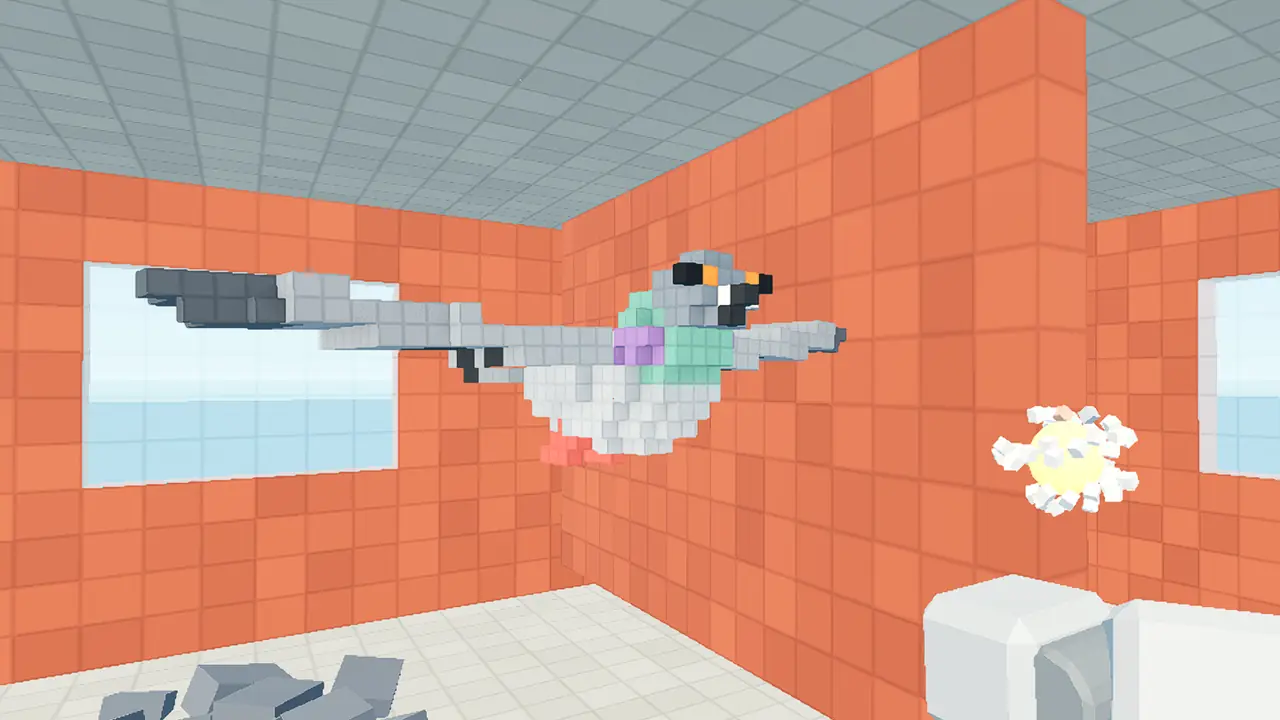
Voice commands in LaVoice are descriptions, not codes. You hold the speak key and say what you want, a pistol, a turret, a flying thing with opinions, and the game interprets the description and builds it from your blocks.
This guide covers the phrasing habits that build quickly and correctly, how detail changes the price, and the recovery moves when the game hears a different request than the one you made. If you want the verified game facts behind every guide here, start with the LaVoice download hub, where the current build, package, and safety checks for the game are kept current.
Phrase It Plainly
The game's recognition is strongest on clear, ordinary words spoken at a normal pace. Name the object first, then its traits: a shotgun with three barrels, a turret that shoots exploding pigeons, a pistol with a bazooka body. Structure like that gives the builder a noun to anchor and adjectives to spend on.
Long speeches build slowly and confuse easily. If your dream weapon needs a paragraph, it needs two requests instead: build the base, then build the attachment or the companion. Two clear commands beat one epic poem under fire.
Detail Costs Blocks
Every trait you add is built out of blocks, so detail is literally priced. Six barrels cost more than one. Flight costs more than standing still. Asking for the biggest version of everything is the fastest way to be the richest sounding, poorest playing person in the arena.
Budget your adjectives. Decide which single trait wins the fight you are in, pay for that, and let the rest go. A plain weapon you can afford now beats a masterpiece you finish building just in time to spectate.
When It Mishears You
Recognition in any game mishears sometimes, especially with a television arguing in the background or a fan pointed at the microphone. Shorten the description, slow down slightly, and name the object again. The game keeps improving its dictionary from the phrases players report through the official community.
Your safety net is the typing mode. In a loud house, or at 1 a.m. with thin walls, typing the identical request builds the identical creation, silently. Many strong players mix both: voice when the room allows, keys when it does not.
Putting It Into Practice
Keep a tiny log of what you built and what it cost you. It sounds excessive for a game built on ridiculous weapons, yet three weeks of logged matches becomes the most honest record of your own style you own: which creations the arena keeps rewarding, which requests you phrase badly under pressure, and which budgets you blow when you already know the sensible answer.
Treat each match as one take in a longer session. A take can be redone, a session builds a body of work. The players with the happiest rooms think in sessions: this week's extraction routes, this month's signature build, this season's endgame habits, each match a little sharper than the last because the last one taught something.
If a rival's creation surprises you, study it before you copy it. Surprise is the product you came for: evidence that another player's imagination spends blocks differently from yours. Players who only ever build the meta are not designing, they are applauding a list, and the arena can tell the difference even when the player cannot.
Lessons From Testing
It is worth saying plainly what LaVoice is not doing while all this happens. It is not replacing skill; it is relocating it. Aim still matters, positioning still matters, nerve still matters. What moved is the arsenal: from a designer's list to your own description, priced in the ground you are standing on. Mature players accept the trade completely and train all four skills at once, which is why their matches look calmer as the creations get stranger. The game gives you a workshop. What you owe the workshop is requests worth building.
Finally, remember that behind every creation in this game there is a person who spent real blocks and real nerve to build it in front of you. Multiplied across a room that is a real gift, and the culture of LaVoice, at its best, knows it. Say thank you by crediting the build. Say it by hosting in return. Say it by never stalling a room, never griefing a harvest, and never describing a request you do not intend to fight with. The technology is a microphone and a pile of blocks, charcoal, cream, and orange, nothing more. The civility is what makes it sing, and civility, fortunately, scales.
Field Notes
- Name the object first, traits second.
- One winning trait per request keeps the price sane.
- Shorten and repeat when the game mishears.
- Typing mode is a full alternative, not a lesser one.
Two companion guides deepen this topic. For the neighbouring angle, read Best First Creations in LaVoice: Strong Starts on a Small Block Budget, and for the practical follow-on, see Destructible Arena Strategy: Terrain Is a Resource in LaVoice. Both were written from the same round of testing on real devices, so the advice lines up without repeating itself.
LaVoice rewards people who treat its small mechanics with respect: honest requests, fair budgets, and creations that get used and credited. Master the habit covered in this guide and the game stops being a novelty and becomes the way matches simply get played.
Quick Answers
Which languages do LaVoice voice commands accept?
English and Portuguese, recognised on the device itself without needing an internet connection.
Can I ask for anything at all?
Within the game's building vocabulary, remarkably strange requests work. If a request fails, simplify it: the builder rewards clear nouns and one or two traits.
Does the game record my voice?
Recognition runs on the device, offline. Your voice is processed locally to build your request.