
Guide
Best First Creations in LaVoice: Strong Starts on a Small Block Budget
The best early creations in LaVoice are cheap, fast, and honest: dependable pistols, simple shotguns, one good turret, and when a flying scout is worth its blocks.
 By Amelia Hart, Mobile Game Reviewer
CONTENTS On this page
The Short Version
The best first creation in LaVoice is not the biggest thing you can imagine. It is the thing that builds fast, costs little, and lets you keep extracting and fighting while richer plans mature. New players overspend on spectacle; strong players buy time first.
This guide ranks the reliable openers, explains what each one is for, and marks the moment in a match when each stops being the right buy. If you want the verified game facts behind every guide here, start with LaVoice arena shooter, where the current build, package, and safety checks for the game are kept current.
The Dependable Openers
A plain pistol or basic rifle is the correct first sentence in almost every match. It builds quickly, behaves exactly as expected, and turns you from a harvesting target into a participant. A simple shotgun is the close quarters cousin: devastating in corridors and rooms, honest about its range.
Neither will win a highlight reel. Both will win the first fight, which is the one that decides who extracts in peace for the next minute.
The Turret Question
A turret is the first creation that changes how the arena plays rather than how you play. Placed to watch an extraction spot or a doorway, it defends your harvesting and punishes anyone rushing your corner. It is also stationary, which means it defends a plan, not a wanderer.
Buy it when you have a spot worth holding. Skip it when the match is mobile and the ground keeps disappearing, because a turret guarding a hole is a monument, not a weapon.
Wings and Other Expensive Ideas
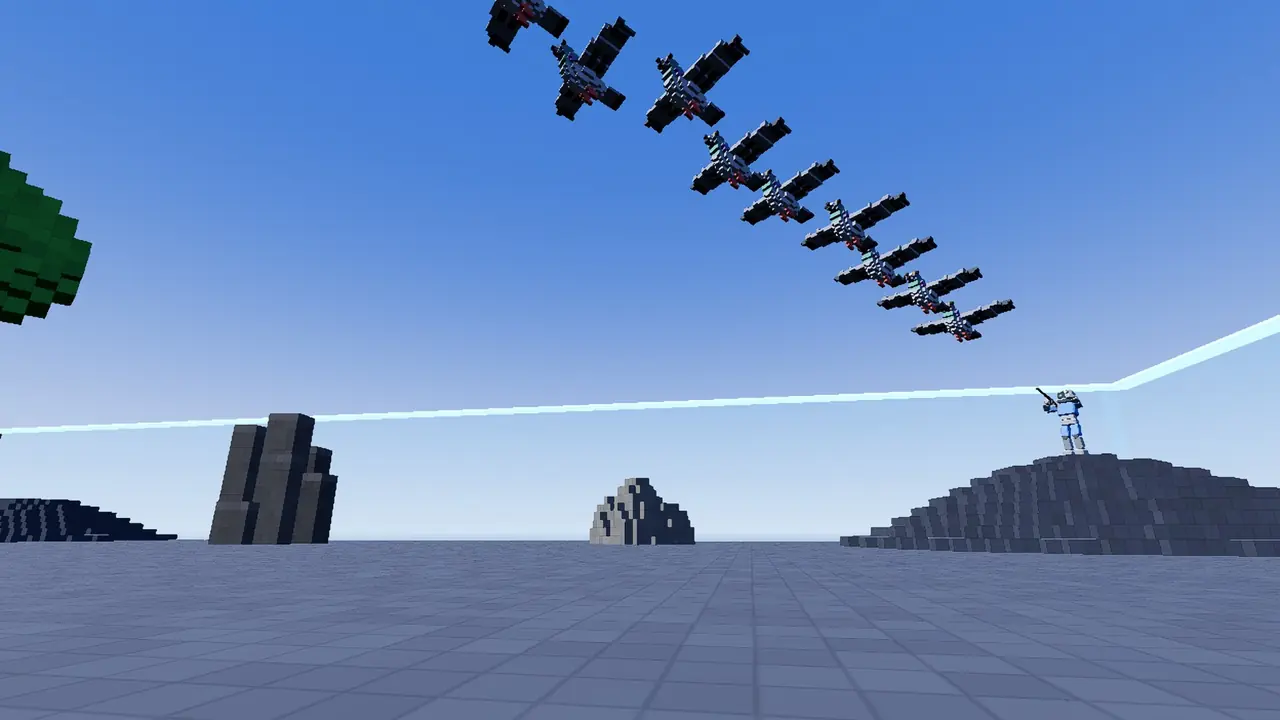
Flight and companions, orbiting pigeons and stranger things, are real options in this game, and they are priced like it. A flying scout can own the late game on an open arena. It can also eat your entire budget while a bot with a basic rifle explains the ground rules.
Treat expensive ideas as second creations, bought from a position of safety with a reserve kept back. Ambition is a mid game luxury. The opener's job is survival with options.
Putting It Into Practice
Talk to your room like people, not like an audience. A warning before you demolish shared footing, a credit for the build that saved the tower, a plan spoken early enough to matter: these courtesies are the difference between a room that forms once and a group that forms every week. LaVoice runs on that return traffic.
And when the mechanics fade and it is just you, a speak key, and an arena full of other people's ideas, that is the game working exactly as its developer described it: say it, build it, fight with it, in the open arena or against the bot, one absurd and honest creation at a time.
Start smaller than your ambition. The players who get the most from LaVoice begin with the cheapest version of the plan in front of them, learn how the match behaves, and only then trust the same flow with a creation that matters. Small builds are rehearsals where the mechanics become invisible, and invisible mechanics are what let a game disappear into a habit.
Lessons From Testing
Time is the quiet variable in every guide on this site. Requests spoken early, while the arena is full and the room is calm, build the tempo that later requests inherit; the same description spoken into a collapsing endgame arrives as a gamble wearing a disguise. Updates installed patiently, over the top, with a restart and a minute of settling, behave; updates rushed at midnight misbehave theatrically. Even this page's troubleshooting starts with permissions and patience rather than reinstalls for a reason. Most of what looks like game behaviour is timing, and most of mastery, in LaVoice as in the studio, is learning when to press the button.
The mistake that shadows every topic on this site is treating the game as a vending machine: insert description, receive victory. LaVoice is closer to a negotiation with a room. Rooms respond to how they are played, and a player who extracts carelessly, phrases lazily, or ignores the endgame will watch the arena go quiet over a fortnight. The fix is never a setting. It is the slow, ordinary work of harvesting better, describing honestly, and reporting back on what was built, which is why the guides here return so often to habits rather than buttons. Buttons end; habits compound, and compounding is what turns a novelty download into the way a person simply plays.
Field Notes
- Open with a plain pistol or rifle almost every time.
- A turret defends a plan; buy it only when you have one.
- Expensive creations are second buys, never first.
- Keep a reserve; an opener that empties you is a trap.
Two companion guides deepen this topic. For the neighbouring angle, read Blocks Are Money: The LaVoice Extraction Economy Explained, and for the practical follow-on, see LaVoice Microphone Not Working? Fixes for Recognition and Voice Chat. Both were written from the same round of testing on real devices, so the advice lines up without repeating itself.
LaVoice rewards people who treat its small mechanics with respect: honest requests, fair budgets, and creations that get used and credited. Master the habit covered in this guide and the game stops being a novelty and becomes the way matches simply get played.
Quick Answers
What is the single best first creation in LaVoice?
A plain, fast building pistol or rifle. It is cheap, predictable, and makes every later plan possible.
Are joke creations ever worth building?
Yes, once you are safe. A ridiculous build that works is the soul of this game; it is just a terrible first purchase.
How do I know a creation is too expensive for the early game?
If building it leaves you with no reserve and no defence while it assembles, it is too expensive for right now.